

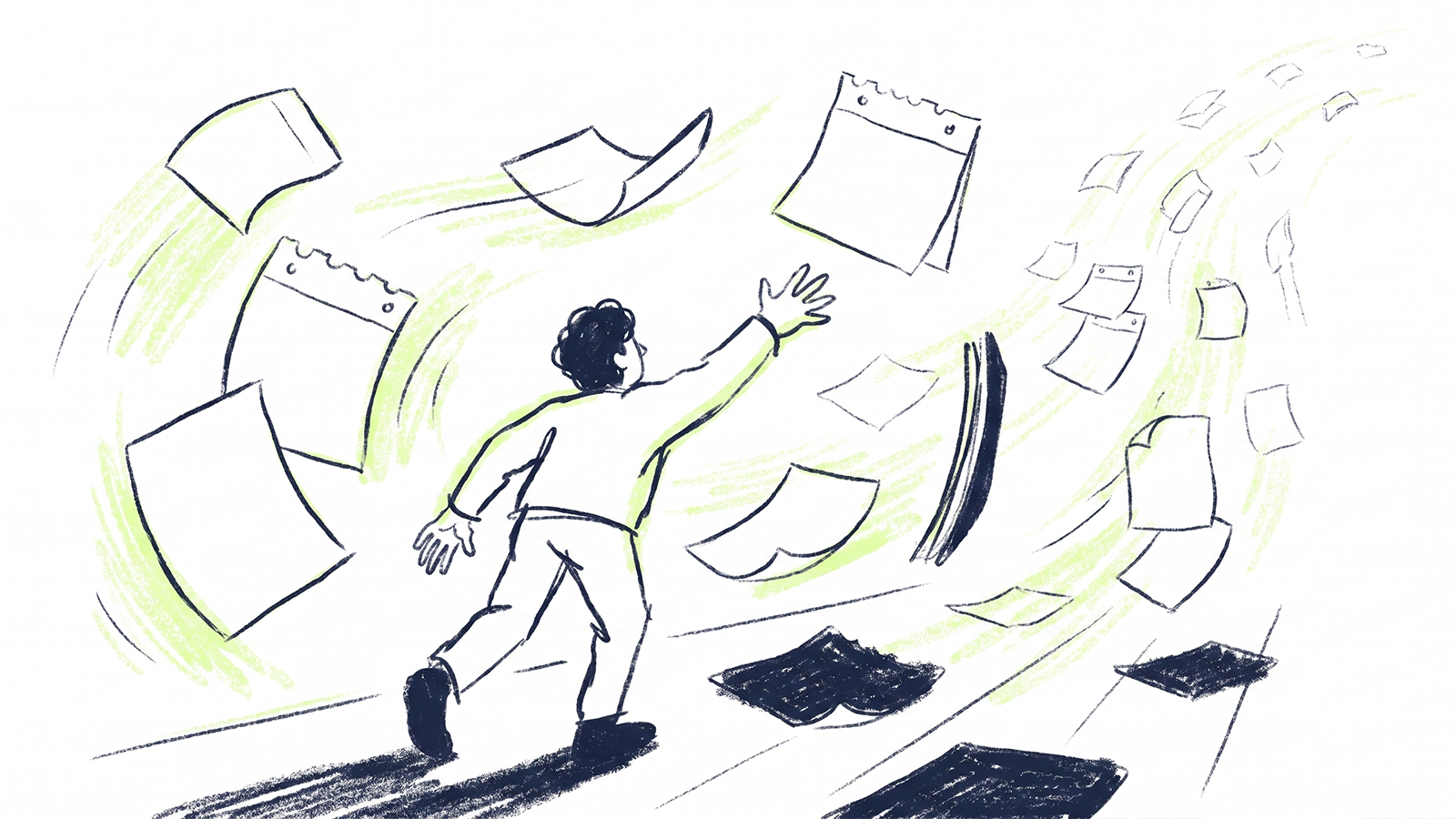


That was the problem. A case file stalled by the client gets noticed. A case file stalled by the brokerage doesn't. This cycle was about making the second kind visible.

Here's what changed
01Perlita writes to you before you ask
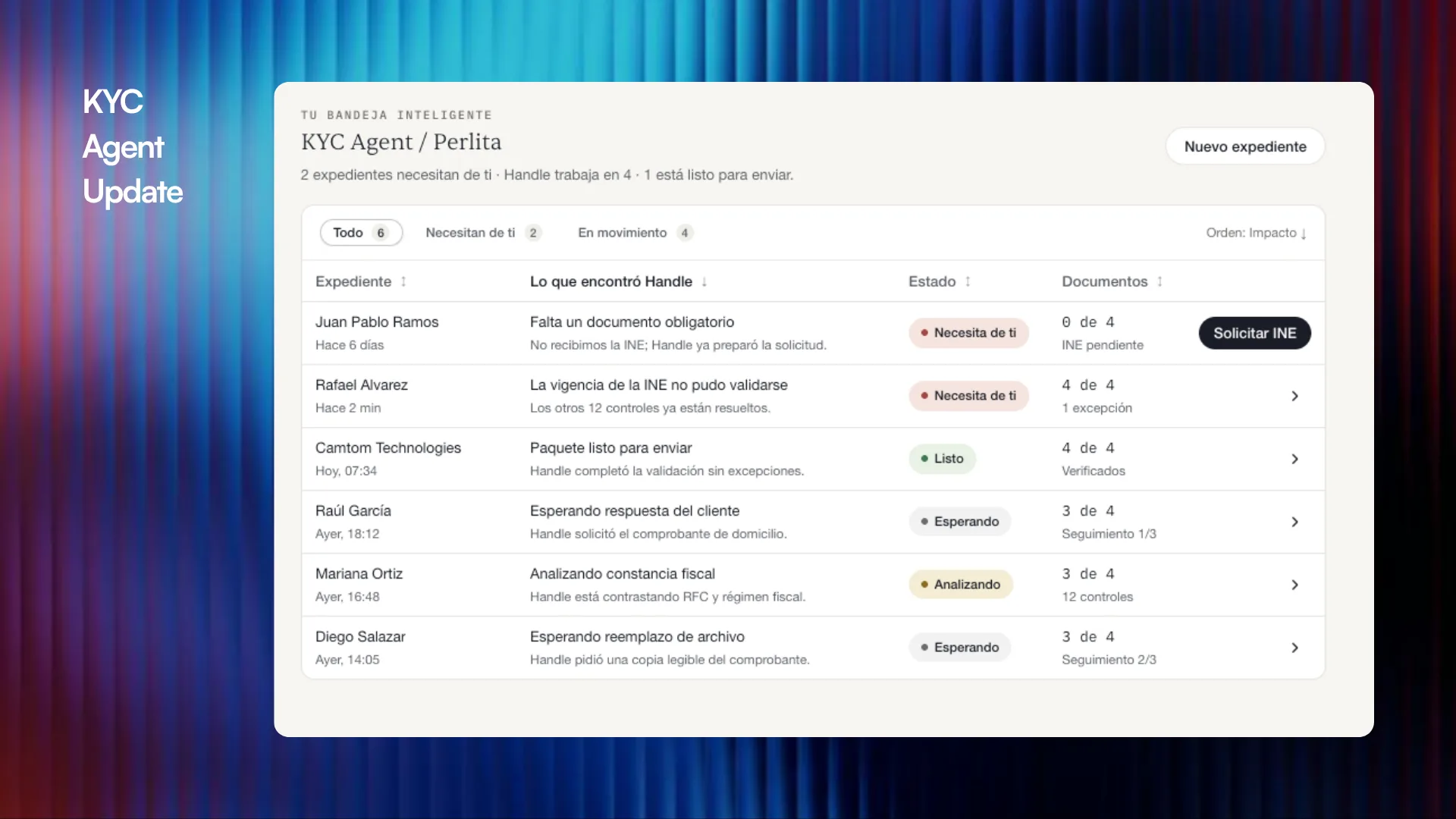
Before: to know which case files depended on us, someone had to log into the platform, filter, and check them one by one. In practice that happened whenever someone remembered. Blocked files, files with pending corrections or with no contact piled up in silence.
Now: Perlita sends a summary email with the case files waiting on our action. Prioritized, with the reason for each one, and a direct link to the case.
It's not a report. It's a list of what's in our court, ordered by urgency. Fewer forgotten files means exactly the same thing as more cases moving forward and closing.
02You reply to her like a teammate
Before: any question about a case file meant opening the platform, finding the case, reading it, and then acting. Each step was small, but together they were the reason so many things got left “for later”.
Now: you reply to the email. As if you were writing to someone on the team.
“What's missing from Adrián's case?”
She answers instantly, reading the case file.
“Ask Adrián for his updated proof document”
She drafts the message and asks for your confirmation before sending it.
All from your email. Without logging into the platform. The case file stops being a place you have to go and becomes a conversation you're already having.
03Nothing reaches the client without your confirmation
This is the change we were most careful with, because an agent that can act on its own is useful exactly to the extent that you know when it will act on its own and when it won't.
The rule has two sides:
Does it directly
Internal actions: analyzing a case file, packaging it, answering a question. There's no point asking permission to read.
Asks you first
Anything that reaches the client requires your confirmation. Always. Perlita prepares, you approve.
And one layer below: she only replies to members of the brokerage, and only if the email is verified. An email pretending to come from someone on the team won't move her. Without this, giving her instructions by email would be opening a door; with it, it's a locked door.
Status
Tested end to end in an isolated environment: the proactive summary, email replies, the confirmation flow and the security locks. Everything behaves as described above.
What's next
Turning it on brokerage by brokerage. Not all at once: we're enabling it one operation at a time, watching how it behaves with each one's real volume before moving to the next.
General updates
The rest of the week, outside KYC. None of these changes merits its own note, but together they're half the work of the cycle.
Quoting
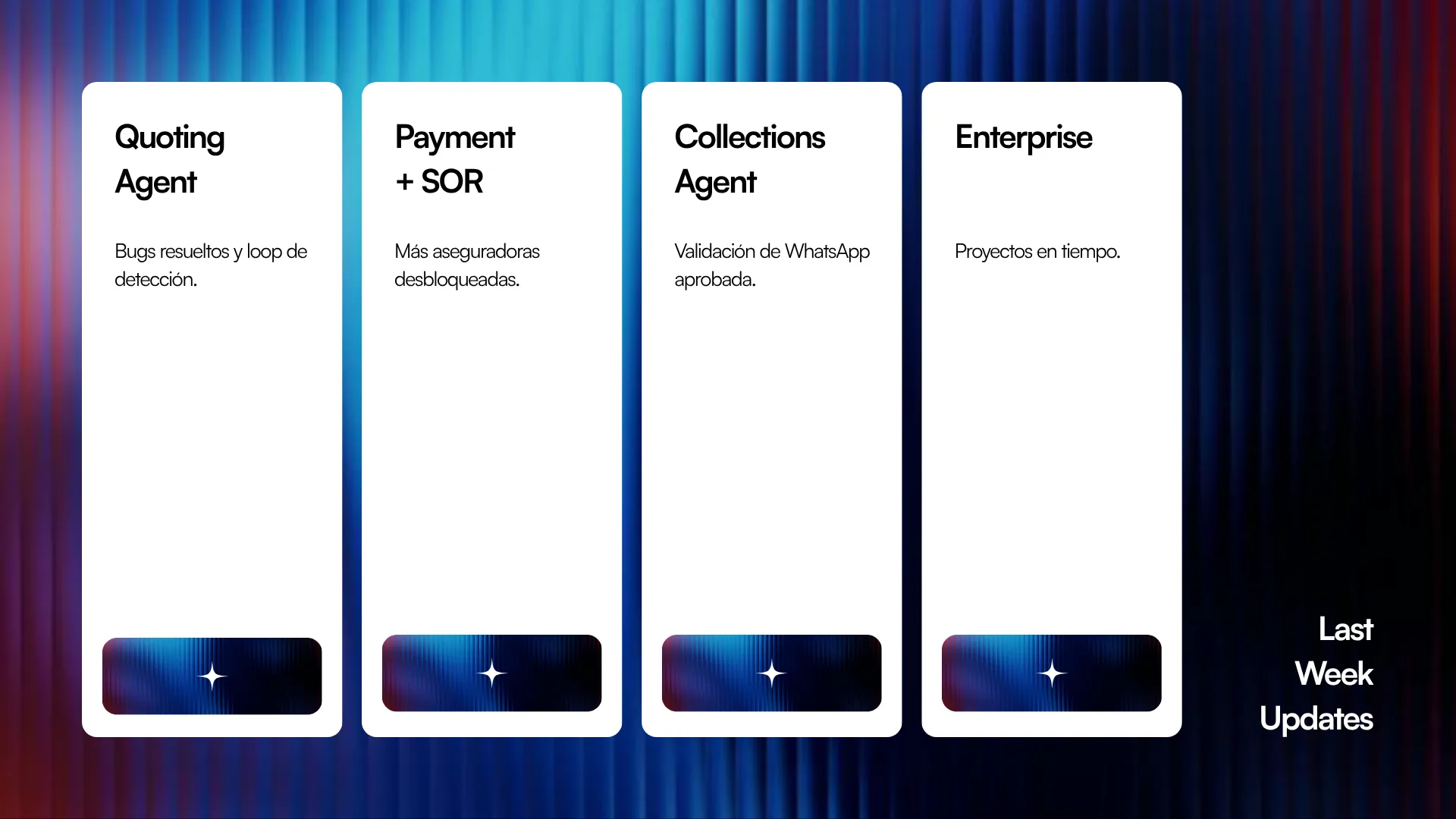
Bugs fixed and a detection loop
The week went into reliability: several bugs in the Quoting agents were fixed, and the automated loop that detects and fixes them on its own went live. The real change isn't the list of closed bugs, it's how long it takes for someone to find out something broke.
Payments + SOR
More carriers unlocked
More carriers with live receipts in SOR2, and another group already in integration. Each one that comes in is one less front where someone has to key data in by hand.
Multi-Channel Collections agent
WhatsApp validation approved
The WhatsApp Business account validation was approved. The number still has to be ported; once it is, messaging runs alongside email and calls within the same collections flow, not as a separate channel.
Enterprise
Projects on schedule
All ongoing projects are on schedule.
Closing
The KYC agent already knew how to process case files. What it didn't know was how to speak up when the file was waiting on us.
That silence had a cost that didn't show up in any metric: cases that weren't closing, not because they were hard, but because nobody was looking at them.
If your brokerage has KYC files that get stuck on our side and you want to be among the first to turn this on, reply to this email and we'll activate it.
See you next week with more updates.