




This is what changed over the last 2 weeks
01Collections
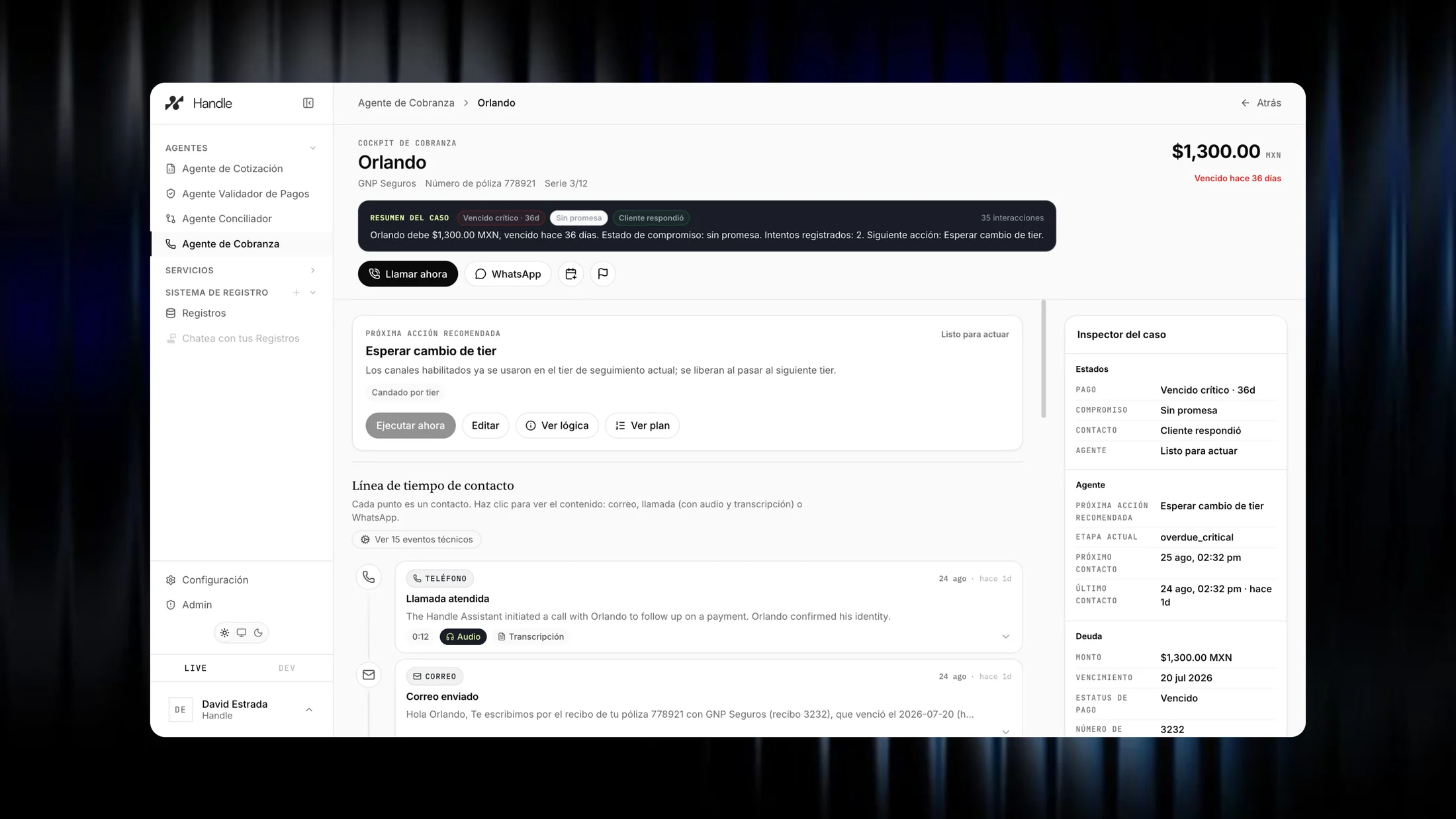
A new collections architecture: Payment Validation V2
We are migrating the collections engine from PV1 to PV2, and the heavy lifting is on the carrier side, not in configuration. Each carrier has to be validated individually on the new architecture before it can run on it. A little over half of the carriers in the collections catalog are already validated, and that is the order in which we are pushing the rollout: carriers first.
Now live: SICAS integration
The policyholder's email and phone number now sync from SICAS straight into the System of Record. In practice: the Multi-Channel Collections agent reaches the policyholder with data that comes from the carrier, not from a manual entry made months ago and already out of date. It is the difference between a payment reminder that lands and one that bounces.
What's next
Finish validating the carrier catalog on PV2, and get the collections flow running without SICAS or Quattro in the middle.
02Quoting
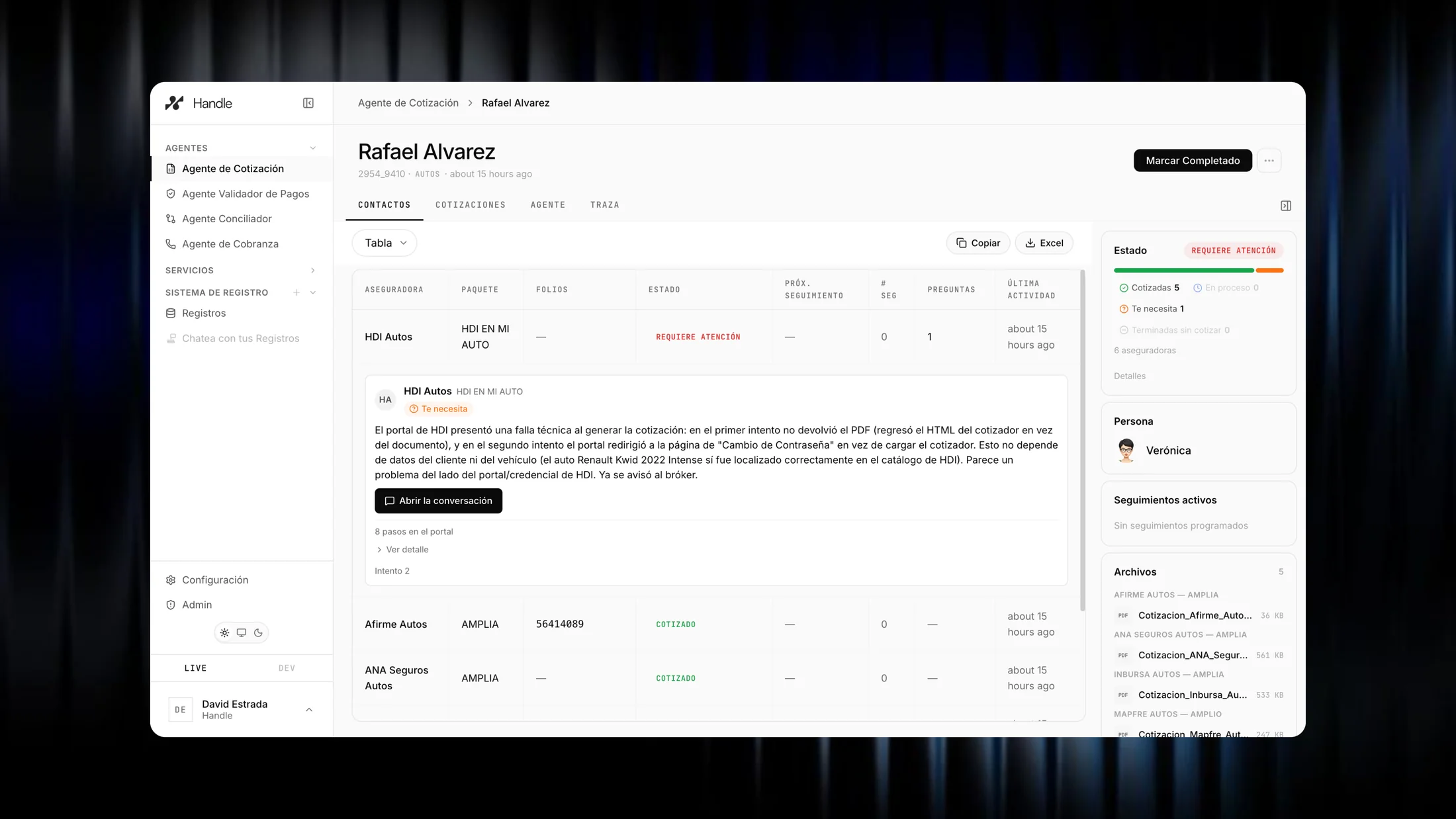
9 of 12 GMM carriers live. It used to be 5
The biggest jump of the cycle: we nearly doubled automated quoting coverage in Major Medical (GMM).
What we built:
MetLife GMM
Solved as a desktop application, not a web portal. A technical path we did not have open before.
BX+
Live through an Excel-based quoting mode. Here is what matters: the mode is reusable for any carrier that quotes through a spreadsheet. The next one ships in a fraction of the time.
Panamerican
The ninth carrier in the portfolio to go live.
Higher success rates where we already operated
HDI from 78.6% to 85.0%, Chubb from 61.9% to 76.0%.
76.6% overall success rate, with 28% more volume processed
Raising the success rate while volume grows is the hard part. Usually one comes at the expense of the other: more volume exposes more edge cases and the rate drops. When both rise at the same time, it means the improvements are structural, not patches.
We also closed most of the module's open bugs, prioritizing the ones that were blocking real operations.
03System of Record
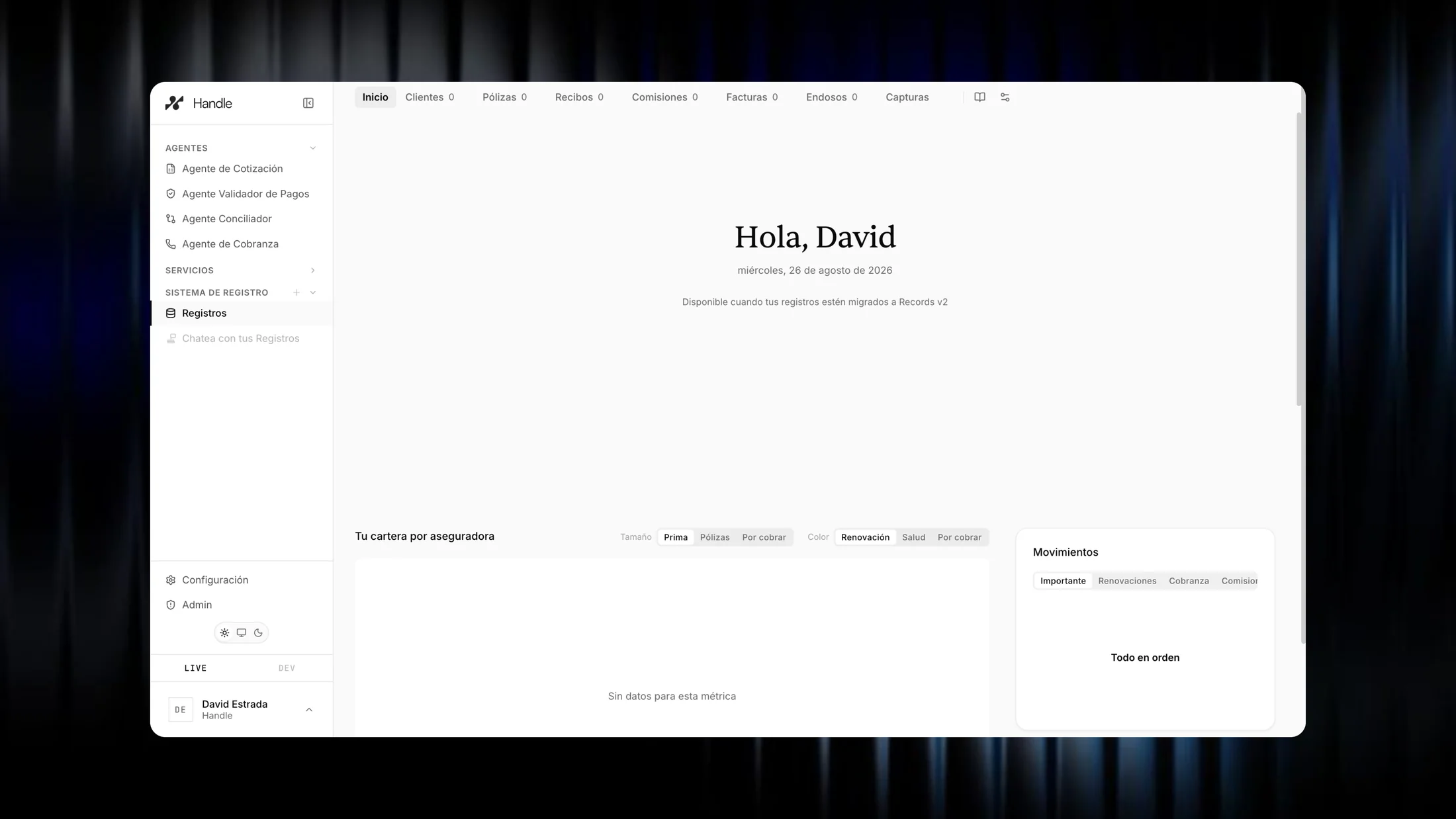
SOR2: better data quality, at the source
Version 2 of the System of Record changes where the information comes from. Instead of rebuilding the policy from what was entered manually, we take it from the source: policy declarations pulled straight from the carrier, and MAPFRE invoices processed as PDF and XML in parallel. The XML provides the structure, the PDF provides the backup.
The difference in data quality versus SOR1 is material, and it shows most where it used to hurt: policies with endorsements, term changes and partial renewals.
A new front: portals are locking down
We finished the Qualitas integration and, almost right away, the portal hardened its defenses against automation. It is not an isolated case: it is where the industry is heading. Carriers will keep closing the door on automated browser access.
Our answer is not to fight portal by portal. We are classifying each portal by whether it requires a browser or not, and in parallel moving everything we can to direct integration, with no browser in between. Every portal we migrate this way stops paying that tax for good. That is the architecture bet for the semester.
04Implementation
A dedicated Forward Deployed Engineering team
A capacity update, not a product one. Starting September 1, 5 Forward Deployed Engineers join the team, dedicated exclusively to enterprise implementations.
The reason is simple: in large deployments, the complexity is not in the software, it is in mapping the broker's real operation to the product. Every operation has its own way of naming lines of business, structuring books and handling exceptions. A dedicated FDE cuts that ramp-up time dramatically. And that was our constraint, not the technology.
Closing
Four fronts. That is what we built over the last 2 weeks
If any of this touches your operation directly (the migration to Payment Validation 2, a specific carrier in quoting, or SOR2), reply to this email and we will look at it together.
See you in two weeks.